
Imagine driving down Hurontario Street after a sudden 15-centimetre snowfall, only to feel your brake pedal vibrate when the light at Eglinton turns red. You shouldn’t have to guess if your vehicle will stop in time. It’s even worse when your family is in the car. Most drivers in the GTA feel a bit of anxiety when a shop mentions a brake system service. Technical jargon and potential costs can feel overwhelming. It’s frustrating to worry about being overcharged for repairs you might not even need yet.
At Sahara Motors, we believe in complete transparency. We’re your neighbors, and we want you to feel confident behind the wheel. In this guide, you’ll discover exactly what happens when our technicians inspect your vehicle. You’ll learn how to tell when it’s time to spend C$300 on new pads versus when you can safely wait another 5,000 kilometres. We’ll walk you through the essential safety checks that keep you in control on icy Ontario roads. From fluid levels to rotor thickness, you’re about to get a clear look at how we keep your commute reliable and your loved ones safe.
Key Takeaways
- Understand why a preventative brake system service saves you money by extending the life of your pads and rotors before they require a costly replacement.
- Discover how Ontario road salt and heavy stop-and-go traffic on the 401 and QEW accelerate wear and corrosion on your vehicle’s metal hardware.
- Identify the critical warning signs-like a spongy pedal or your car pulling to one side-that signal it is time for a professional safety inspection.
- Get a behind-the-scenes look at our multi-point digital inspection and the thorough cleaning process our family-owned shop uses to keep you safe on the road.
- Experience the peace of mind that comes with our transparent, hassle-free approach where no repairs are ever performed without your explicit approval.
What is a Brake System Service? (Maintenance vs. Repair)
A brake system service is the proactive disassembly and cleaning of the braking system to prevent premature failure. Think of it as an oil change for your stopping power. It keeps everything moving freely. While many drivers in Mississauga focus on engine health, your brakes deserve the same consistent care. A professional brake system service involves cleaning, lubricating, and adjusting your existing parts rather than just throwing them away. By understanding how brake systems work, you can see why metal parts moving against each other need regular attention to avoid friction damage. This routine maintenance helps you get the maximum life out of your pads and rotors. It ensures your car stops exactly when you need it to.
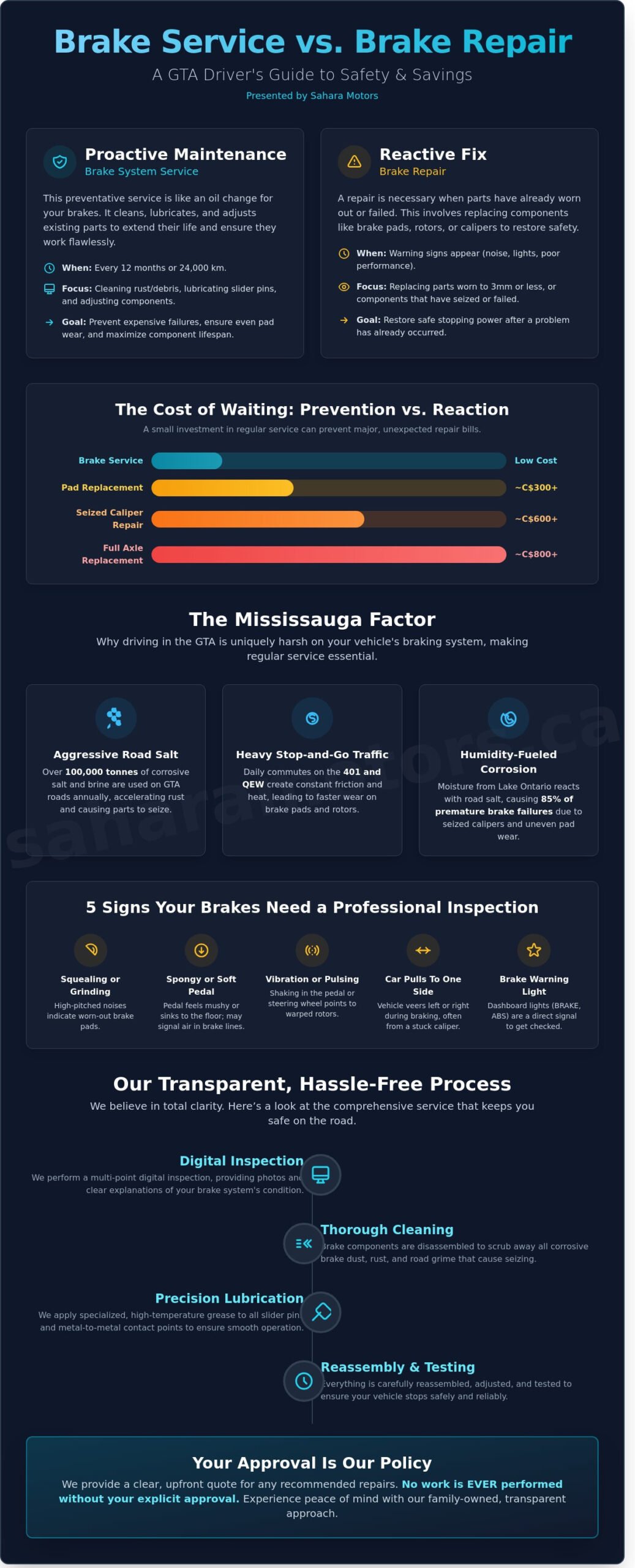
Unlike a brake repair, which replaces worn-out pads or rotors, a service extends the life of those parts. You are essentially paying for time. When a technician performs this service, they remove the buildup of road debris and brake dust that accumulates during your daily commute on the 401 or QEW. They apply specialized lubricants to the slider pins and clips. This prevents the “sticky” feeling you might notice in stop-and-go traffic. It’s a reliable way to avoid the C$500 to C$800 cost of a full axle replacement before it’s actually necessary.
The “Is it a scam?” Question
You might wonder why dealerships suggest this every 20,000 to 30,000 kilometers. It isn’t a cash grab. In Ontario, road salt and humidity cause 85% of premature brake failures due to corrosion. If you skip this service, your calipers can seize. A seized caliper often leads to a C$600 repair bill, whereas a service costs a fraction of that. Don’t confuse a free visual inspection with a paid service. A visual check only looks at pad thickness. A full brake system service involves taking the brakes apart to scrub away rust and apply high-temperature grease to the slider pins. This ensures your pads wear evenly across all four wheels. Without this, one pad might wear down to the metal in 15,000 kilometers while the others look brand new.
Brake Service vs. Brake Repair
Knowing the difference saves you money and stress. You need a service if your car drives fine but it’s been 12 months since your last checkup. This keeps your vehicle safe and prevents future issues. You need a repair if you hear squealing, feel grinding, or see a warning light on your dashboard. Sahara Motors helps Mississauga drivers make the right choice by providing transparent advice. We don’t push for replacements if a simple cleaning will do. Our goal is to keep you on the road with a reliable vehicle that fits your budget. Consider these differences:
- Service: Performed every 24,000 kilometers or 12 months. It’s preventative.
- Repair: Performed when parts are worn to 3mm or less. It’s reactive.
- Service: Focuses on cleaning and lubrication.
- Repair: Focuses on component replacement.
Our family-owned approach means we treat your car like our own. We use certified techniques to ensure your safety. Whether you have perfect credit or are rebuilding your financial standing, we provide the same high-quality care. Keeping your brakes maintained is the most cost-effective way to drive. It prevents the sudden, expensive surprises that can ruin your monthly budget. We make the process hassle-free so you can get back to your life with total peace of mind.
The Mississauga Factor: Why GTA Roads are Tough on Brakes
Driving in Mississauga presents a unique set of challenges that your vehicle’s stopping power must handle every single day. You aren’t just cruising on open highways; you’re navigating a high-stress environment that accelerates wear on every metal component. Local conditions in the Greater Toronto Area (GTA) mean a standard brake system service is required more frequently here than in drier, less congested climates. Our team at Sahara Motors sees the direct impact of Ontario’s elements on local vehicles, where the combination of moisture and chemicals creates a perfect storm for mechanical failure.
Ontario road crews apply over 100,000 tonnes of salt and liquid brine to GTA roads annually to keep us moving during the winter. While this keeps the 401 clear, it’s incredibly aggressive toward your car’s undercarriage. This salt doesn’t just sit there; it reacts with the high humidity levels we experience near Lake Ontario. Because brake fluid is hygroscopic, it naturally attracts and absorbs moisture from the air. When your fluid hits a 3% moisture content level, its boiling point drops significantly, which can lead to a spongy pedal feeling during a sudden stop at a busy intersection like Hurontario and Dundas.
Corrosion and Rust: The Silent Brake Killer
Salt buildup is a primary reason why brake pads get stuck in their metal brackets. When rust forms on the surface of the bracket, it expands and pinches the pad, preventing it from retracting. This causes the pad to stay in constant contact with the rotor, leading to 40% faster wear than normal. You might notice your car pulling to one side or hear a faint grinding noise even when you aren’t touching the pedal. Seized slider pins are another common local issue; if these pins don’t move freely, your inboard and outboard pads won’t wear evenly. A professional technician will always clean the rust off the hub surface to ensure a perfectly flat mounting area, which prevents the steering wheel vibrations often mistaken for warped rotors. Following the Federal Motor Vehicle Safety Standards ensures your vehicle maintains the stopping distances required for legal safety, especially when corrosion begins to compromise hardware integrity.
Stop-and-Go Driving in Mississauga
The QEW and the 401 are notorious for heavy traffic, and this constant stop-and-go cycle creates immense thermal stress. Every time you tap the brakes in a traffic jam, kinetic energy turns into heat. In the peak of a 30°C Mississauga summer, your rotors can reach temperatures exceeding 300°C in heavy traffic. This heat breaks down the chemical integrity of your brake fluid over time. We often tell our neighbors that “city miles” in the GTA count double for brake wear. If you spend two hours a day commuting through Square One traffic, your pads might only last 25,000 kilometres compared to the 60,000 kilometres someone might get in a rural area.
The transition from summer heat to a -20°C winter deep-freeze is particularly hard on rubber seals and hoses. These temperature swings cause components to expand and contract, which can lead to microscopic leaks or brittle lines. Regular maintenance helps you stay ahead of these issues before they become expensive repairs. If you’ve noticed a change in how your car handles the commute, it might be time to check our inventory of safety-inspected vehicles or consult with a local specialist. Keeping your brake system service up to date is the most reliable way to ensure your family stays safe on our unpredictable Ontario roads.
5 Signs You Need a Brake System Service in Mississauga
You rely on your vehicle to navigate the busy intersections of Mississauga every single day. When your car doesn’t respond exactly how you expect, it creates unnecessary stress. Your safety is our priority, and recognizing these five warning signs can prevent a small adjustment from turning into a C$1,200 repair bill. If you notice any of these symptoms, it’s time to book a brake system service to ensure your vehicle remains reliable and safety-inspected for the road ahead.
- A “spongy” or soft brake pedal: If you find yourself pressing the pedal 5 to 8 centimetres further than usual to come to a complete stop, your hydraulic system has a problem. This often indicates air in the lines or a moisture-contaminated fluid supply.
- Vehicle pulls to one side: When your car veers toward the curb or the median while braking, it’s a sign of uneven pressure. This typically happens when a caliper piston seizes or a brake hose collapses internally, which forces one side of the car to work harder than the other.
- A faint squeak or “chirp”: This high-pitched noise is actually a built-in safety feature. Manufacturers install small metal tabs called wear indicators that scrape against the rotor when your pads drop below 3 millimetres of thickness. The sound usually disappears when you apply pressure.
- Visible rust or “pitting”: Mississauga winters involve heavy road salt that eats away at metal. If you look through your rims and see orange flakes or deep grooves covering more than 15% of the rotor surface, your stopping distance will increase significantly.
- Reduced fuel economy: A “dragging” brake pad stays in contact with the rotor even when your foot is off the pedal. This creates constant friction that can reduce your fuel efficiency by as much as 10%, making your weekly C$90 fill-up at the pump disappear much faster.
The Sound of Trouble
Distinguishing between different noises helps you prioritize your repairs. A light squeak on a damp October morning is often just surface moisture evaporating. However, a consistent “chirp” means your pads are 80% worn. If you hear a harsh, grinding metal-on-metal sound, the friction material is completely gone. This destroys the rotors instantly. Waiting for a sound to start is a gamble you don’t need to take. For more detailed information on maintaining your vehicle’s safety, you can consult this Consumer’s Guide to Brake Repair Service to understand the technical standards required for a safe stop.
Brake Pedal Feedback
Your feet often feel trouble before your ears hear it. A vibrating or pulsating pedal during a stop at a red light on Hurontario Street suggests your rotors are warped. This happens when extreme heat cycles distort the metal discs. Even more dangerous is a sinking pedal that slowly drops to the floor while you’re waiting in traffic. This indicates a failing master cylinder or a leak in the system. A professional brake system service includes a full fluid flush, which removes trapped air and moisture. This simple maintenance step restores that firm, “new car” pedal feel and ensures your car is ready for any weather conditions Ontario throws your way.
What Happens During a Sahara Motors Brake Service?
When you bring your vehicle to Sahara Motors, we don’t just glance at your pads through the spokes of your rims. A professional brake system service requires a deep dive into the mechanical health of your vehicle. Our process begins with the 100% removal of all four wheels. This allows our technicians to perform a multi-point digital inspection of your rotors, calipers, and lines. We document every finding with photos and measurements, sending a transparent report directly to your phone so you see exactly what we see.
Our team disassembles the calipers and removes the brake pads to inspect for uneven wear patterns. These patterns often tell a story about your driving habits or underlying mechanical issues. We look for “tapered wear” which indicates a sticking caliper pin or a collapsed brake hose. By catching these 5 or 6 minor issues early, we save you from the C$800 plus expense of a total system failure later down the road.
The Cleaning and Lubrication Process
Mississauga roads are notorious for heavy salt and brine application during the winter months. This Ontario road grime creates a thick layer of corrosion on your caliper brackets. We use specialized wire brushes and pneumatic tools to strip this oxidation away until the metal is clean. This step is vital because even a 1-millimetre buildup of rust can cause your brake pads to seize in place.
We apply high-temperature ceramic lubricant, rated for temperatures up to 1,500 degrees Fahrenheit, to all moving contact points. It’s critical to use silicone-based lubricants rather than petroleum-based ones; petroleum products cause the rubber dust boots to swell and fail. We ensure the “ears” of your brake pads move freely within the stainless steel clips. If these pads don’t slide easily, your brakes will drag, reducing your fuel economy by as much as 5% and causing premature part failure.
Brake Fluid Testing and Flushing
Brake fluid is hygroscopic, meaning it actively absorbs moisture from the Mississauga air. During our brake system service, we use a digital refractometer to test the moisture levels in your fluid. Once moisture content exceeds 3%, the boiling point of the fluid drops significantly. This creates a “spongy” pedal feel that becomes dangerous during heavy stop-and-go traffic on the 403 or the QEW.
If your fluid is contaminated, we perform a professional exchange using a pressurized bleeding machine. This process pushes fresh, clear fluid through the entire system, purging air bubbles and dark, oxidized liquid. Clean fluid is the only way to prevent internal corrosion of your ABS master cylinder, a component that can cost over C$1,200 to replace. We don’t cut corners because your safety depends on a system that responds instantly every time you hit the pedal.
Ready to ensure your vehicle is safe for the road? Book your professional brake system service at Sahara Motors today and experience our transparent, family-oriented approach to auto care.
Reliable Brake Service in Mississauga: Book Your Visit
Sahara Motors operates as a family-owned business that values community over high-volume transactions. We treat every vehicle that enters our bay as if it belonged to our own family. This personal touch is why Mississauga drivers have trusted us for years. You won’t find the cold, corporate atmosphere of a big-box dealership here. Instead, you get direct communication and a team that remembers your name and your car’s history. We focus on building long-term relationships through high-quality work and honest advice.
Transparency drives our pricing model. We eliminate the anxiety of “surprise” repairs by providing a full digital inspection before any work begins. Our technicians won’t touch your car for a repair until you provide clear approval of the estimate. There are no hidden fees or vague line items on your invoice. You see exactly what you pay for. Our certified technicians understand the specific needs of GTA drivers. We know how the stop-and-go traffic on the 401 and the salt-heavy winters in Ontario affect your vehicle’s components.
A proactive brake system service is one of the smartest investments you can make for your vehicle. A standard inspection and pad replacement takes roughly 45 minutes. This short appointment can save you upwards of C$500 in the long run. When you ignore worn pads, they eventually grind into the metal of your rotors. Once those rotors are scored or warped, the repair bill doubles or triples. Catching the wear early keeps your costs low and your stopping power high.
The Sahara Motors Difference
Our commitment to the community includes a strict “No Credit, No Problem” policy. We believe financial history shouldn’t dictate your safety on the road. We offer inclusive solutions for all automotive needs, ensuring every driver stays mobile and safe. You can find us conveniently located at 1200 Aerowood Dr, right in the heart of Mississauga. We also offer a unique combination of mechanical expertise and professional detailing. We make sure your wheels look as good as they stop before you leave our lot.
How to Book Your Appointment
Securing your spot is a hassle-free process. You can use our simple online booking tool or give our friendly team a quick call to find a time that fits your schedule. When you arrive, please bring your vehicle’s service history if you have it. Most routine inspections and pad swaps are completed in under an hour, so you can wait in our comfortable lounge or drop your car off. We value your time and aim for a streamlined experience every time you visit. Book Your Mississauga Brake Service Today and experience the difference that local expertise makes for your vehicle’s safety.
Maintaining your brake system service schedule is about more than just avoiding noise. It’s about ensuring your car responds perfectly in an emergency. Our technicians use high-quality parts that meet or exceed OEM standards. We test every vehicle after service to guarantee the pedal feel and stopping distance are exactly where they should be. Don’t wait for the grinding sound to start. Visit our 1200 Aerowood Dr location today and let our family take care of yours.
Drive Safer on Mississauga Roads Today
Your safety on the 401 and QEW depends on a responsive vehicle. Since heavy stop-and-go traffic in Mississauga can increase brake wear by up to 25% compared to rural driving, staying ahead of maintenance is essential. A professional brake system service at Sahara Motors ensures your pads, rotors, and fluid meet Ontario safety standards before small issues turn into C$1,000 repairs. We have served the GTA for over 15 years as a family-owned and operated shop, providing transparent and hassle-free safety inspections you can trust.
Our certified mechanics treat your car like it’s their own; they give you the peace of mind you deserve every time you hit the pedal. We don’t believe in hidden fees or high-pressure sales. Instead, we focus on clear communication and reliable results for every driver regardless of their credit history. It’s time to prioritize your vehicle’s health and your family’s protection. Book Your Certified Brake System Service in Mississauga. We look forward to seeing you at the shop soon.
Frequently Asked Questions
How much does a brake system service cost in Mississauga?
A standard brake system service in Mississauga typically costs between C$150 and C$350 per axle depending on your vehicle’s specific make and model. This investment covers a full inspection, cleaning of all components, and lubrication of moving parts to prevent seizing. If your vehicle requires new rotors or premium ceramic pads, your total estimate might range from C$450 to C$900. We provide a transparent quote upfront so you won’t face any hidden fees when you pick up your car.
Is a brake service the same as getting new brake pads?
No, a brake service is a preventative maintenance procedure while getting new pads is a specific part replacement. During a brake system service, our technicians disassemble the calipers to remove rust and apply high-temperature grease to the slider pins. We only replace pads when the friction material wears down to 3 millimetres or less. Think of the service as a tune-up that extends the life of your hardware and ensures your vehicle stays safety-inspected for the road.
How often should I get my brakes serviced in Ontario?
You should schedule a service every 20,000 to 25,000 kilometres to protect your vehicle from Ontario’s aggressive road salt and extreme temperature changes. Our local climate causes iron components to oxidize quickly, which leads to 15% faster wear on your pads if they aren’t cleaned regularly. Most of our Mississauga neighbors book this maintenance once a year during their spring tire swap. It’s a proactive way to avoid the C$1,200 repair bills that come from neglected, seized calipers.
Can I drive with a squeaking brake for a few days?
You can safely drive with a squeaking brake for 24 to 48 hours, but you should visit a shop immediately to prevent permanent rotor damage. That high-pitched squeal is usually a wear indicator metal tab touching the disc to warn you that 80% of your pad is gone. If you ignore this sound for more than 150 kilometres, you risk grinding metal against metal. This turns a simple pad swap into a much more expensive repair involving new rotors and hardware.
Why do my brakes feel soft in the winter?
Brakes often feel soft during a Mississauga winter because moisture trapped in the brake fluid can freeze or create tiny air bubbles. Brake fluid is hygroscopic, meaning it absorbs about 3% of its moisture content every 12 months from the humid Ontario air. When temperatures drop below zero, this water contamination interferes with the hydraulic pressure needed to stop your car. You’ll notice the pedal feels spongy and requires 25% more travel distance before the car actually slows down.
Does a brake service include a fluid flush?
A standard service focuses on the mechanical hardware, but a fluid flush is a separate maintenance item that usually costs an additional C$110 to C$160. We test your fluid’s copper levels and boiling point during every visit to see if a flush is necessary for your safety. Most manufacturers recommend replacing the fluid every 48,000 kilometres to prevent internal corrosion in your master cylinder. Keeping your fluid fresh ensures your stopping power remains reliable even during emergency braking situations.
How long does a professional brake service take at Sahara Motors?
A professional brake service at Sahara Motors typically takes between 60 and 90 minutes to complete thoroughly. We’ve streamlined our process to ensure your vehicle is safety-inspected and back on the road without any hassle or long waits. Our certified technicians follow a 25-point checklist to verify every clip, spring, and bolt is in perfect working order. You can relax in our comfortable lounge knowing your family’s safety is being handled by experienced, local experts who care about your time.